
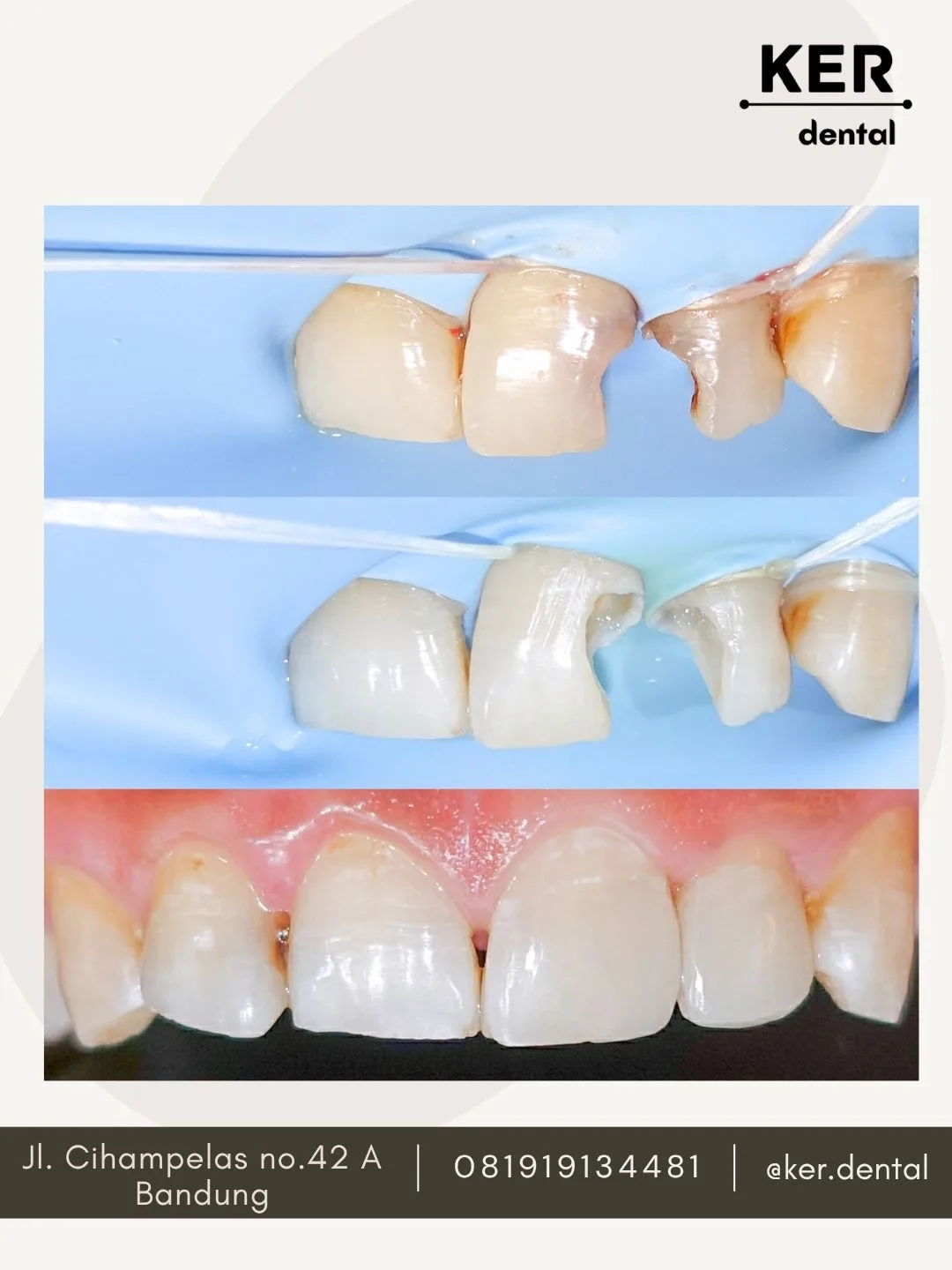
Tooth cavities are one of the most common dental problems. Many people think that cavities are caused only by eating too many sugary foods. In fact, several other factors can increase the risk of developing cavities, including oral hygiene, tooth position, and daily habits.
Understanding the causes of tooth cavities is important so that prevention can be started early. Here are some of the most common causes.
1. Food Trapped Between Teeth
One of the common causes of tooth cavities is food becoming trapped between the teeth. The areas between two teeth can be difficult to clean thoroughly with a toothbrush alone.
This can happen more easily when teeth are crowded or overlapping, creating areas that are difficult to reach when brushing. In addition, uneven or irregular surfaces between teeth can also make food particles more likely to become trapped.
Food particles that remain between the teeth can provide a place for bacteria to accumulate. These bacteria produce acids that gradually damage the tooth surface and can eventually lead to cavities.
Therefore, cleaning between the teeth with dental floss or an interdental brush can help reduce the buildup of plaque and food particles.
2. Infrequent Brushing or Improper Brushing Technique
Brushing your teeth regularly is an important part of preventing cavities. When teeth are not cleaned properly or frequently enough, plaque can accumulate more easily on the tooth surfaces.
However, it is not only the frequency of brushing that matters. An improper brushing technique can also leave certain areas of the teeth inadequately cleaned.
Ideally, teeth should be brushed at least twice a day, after breakfast and before bedtime. Make sure to clean all tooth surfaces, including the back surfaces and areas that are difficult to reach, using the proper brushing technique.
3. Frequent Consumption of Sugary Foods and Drinks
Frequent consumption of sugary foods and drinks is also one of the most common causes of tooth cavities.
The sugar found in food and drinks can be used by bacteria in dental plaque. These bacteria then produce acids that can attack and weaken the tooth enamel.
The risk becomes higher when sugary foods or drinks are consumed repeatedly throughout the day, especially foods that are sticky and tend to remain on the teeth.
After consuming sugary or sticky foods and drinks, it is recommended to rinse your mouth with plain water. This can help remove food particles and reduce the amount of sugar remaining around the teeth.
However, rinsing with plain water is not a substitute for brushing. Regular tooth brushing is still important for maintaining optimal oral hygiene.
4. Crowded or Overlapping Teeth
Teeth that are crowded, overlapping, or improperly aligned can make certain areas more difficult to clean.
When teeth are too close together or overlap, a toothbrush and interdental cleaning tools may have difficulty reaching certain areas. As a result, plaque and food particles can become trapped more easily, increasing the risk of cavities.
If the position of the teeth makes maintaining oral hygiene difficult, a dentist can evaluate whether orthodontic treatment such as braces or clear aligners may be appropriate.
Orthodontic treatment is not only intended to improve tooth alignment and smile aesthetics. In certain cases, it can also help make the teeth easier to clean.
5. Insufficient Fluoride Exposure
Fluoride is a mineral that helps strengthen tooth enamel and increase the teeth's resistance to acid attacks.
Insufficient fluoride exposure may make teeth more susceptible to the development of cavities. One way to obtain fluoride is by using fluoride toothpaste when brushing your teeth.
Regularly using fluoride toothpaste is one of the simple steps that can help prevent tooth cavities.
6. Chewing Mainly on One Side
The habit of chewing mainly on one side can also affect oral hygiene.
The side of the mouth that is rarely used for chewing may experience greater accumulation of food particles and plaque because it does not receive as much of the natural mechanical cleaning effect associated with chewing.
If you habitually chew on only one side for a long period of time, it is important to pay attention to the cleanliness of both sides of your teeth.
However, chewing on one side can also be a sign of a problem on the other side, such as a cavity, tooth sensitivity, a broken tooth, gum problems, or another condition that makes chewing uncomfortable. If this occurs, a dental examination is recommended.
How Can You Prevent Tooth Cavities?
Many of the risk factors for tooth cavities can be reduced by maintaining good oral hygiene and healthy habits consistently. Here are some steps you can take:
Brush your teeth twice a day using fluoride toothpaste.
Clean between your teeth using dental floss or an interdental brush.
Limit the frequency of consuming sugary foods and drinks.
Rinse your mouth with plain water after consuming sugary or sticky foods and drinks.
Brush your teeth using the proper technique.
Have regular dental check-ups.
Have your tooth alignment evaluated if your teeth are crowded or overlapping and difficult to clean.
Visit a dentist promptly if you experience tooth sensitivity, food frequently getting trapped between your teeth, or changes in the surface of your teeth.
Conclusion
The causes of tooth cavities are not limited to consuming too many sugary foods. Food trapped between teeth, poor oral hygiene, improper brushing technique, crowded or overlapping teeth, insufficient fluoride exposure, and the habit of chewing mainly on one side can also increase the risk of developing cavities.
By maintaining good oral hygiene and having regular dental check-ups, cavities can be detected and